Contact Us


Blog
October 30, 2026
VROC™ by Graid Technology: The Protection You Trust. The Progress You Need.
Protecting enterprise storage starts with a practical requirement: keeping the operating system and application data resilient when a drive fails. Customers need that protection without unnecessary hardware, deployment complexity, or uncertainty about their platform’s future.
Confidence comes from more than a spec sheet. Since 2017, VROC has been deployed on more than one million CPUs, building on a software lineage spanning more than 16 years across Intel RSTe and VROC. That production experience is a foundation customers can build on, not something a feature checklist alone can demonstrate.
VROC™ by Graid Technology carries that foundation forward. Version 26.H2—our first VROC release—introduces simpler licensing, support for accelerated workloads, and a committed roadmap. Customers gain practical improvements backed by years of real-world deployment
Enterprise RAID. Hold the Extra Hardware.
VROC provides enterprise NVMe RAID without a dedicated RAID controller in the data path, reducing hardware requirements and preserving PCIe slots, while reducing cost. Boot RAID helps protect the operating-system volume, while hot-plug support and drive-status LEDs help administrators identify and replace failed drives. Software-based upgrades and out-of-band management capabilities further simplify maintenance on supported configurations.
Release 26.H2 supports Intel Xeon 6 platforms and Windows and Linux environments on supported configurations.
Less Complexity. More Possibility.
The first release under Graid Technology brings improvements that address how customers deploy and evolve their infrastructure:
- Simpler licensing: UEFI-based activation reduces reliance on physical hardware keys and establishes a licensing model for future Intel platforms. Hardware-key activation remains supported for Xeon 6 designs, giving customers flexibility during the transition.
- GPU-accelerated workloads: GPUDirect Storage support extends VROC’s role into GPU-accelerated, data-intensive environments.
- More deployment choice: Coexistence with SupremeRAID™ allows customers to use both technologies within the same system according to workload requirements.
VROC also strengthens Graid Technology’s three-pillar portfolio alongside SupremeRAID™ for GPU-accelerated RAID and SupremeIO™ for KV-cache acceleration. Together, these solutions reflect a broader commitment to storage innovation: protecting enterprise data, unlocking NVMe performance, and supporting the demands of AI inference.
Protect Your Valuable Data. Plan Ahead with Confidence.
Our investment extends beyond this release. Graid is committed to a 24-month, OEM-driven roadmap focused on expanding platform support and delivering new capabilities. Lenovo and Supermicro have endorsed Graid’s stewardship and helped shape that roadmap, keeping development aligned with the systems customers deploy.
Existing customers have a path forward, too. Intel VROC remains in sustaining mode, while VROC™ by Graid Technology becomes the development path for new features and platforms. Qualifying Xeon 6 configurations have a supported migration path, helping customers preserve existing investments while gaining access to continued innovation.
VROC 26.H2 turns that commitment into practical progress: established protection, more flexible deployment, and new capabilities for evolving workloads.
Contact Graid Technology to review supported configurations and evaluate the right deployment or migration path for your environment. Learn more at graidtech.com/vroc-by-graid.
News & Resources
October 15, 2026
Graid Technology Featured in TechArena’s AI Infrastructure Report, The Integrated Machine
Graid Technology is featured in TechArena’s report The Integrated Machine. Field CTO Randy Kreiser discusses KV cache, inference performance, and why storage has to be designed into the rack from the start.

September 14, 2026
Breaking the KV Cache Inference Wall — Solidigm Data Insights Podcast, Featuring Graid Technology
"You've got a four-lane highway, and to get to your storage, you have to go down to a one-lane bridge." Garrett McKibben joins Solidigm on TechArena's Data Insights podcast to unpack why KV cache overflow is choking AI inference.
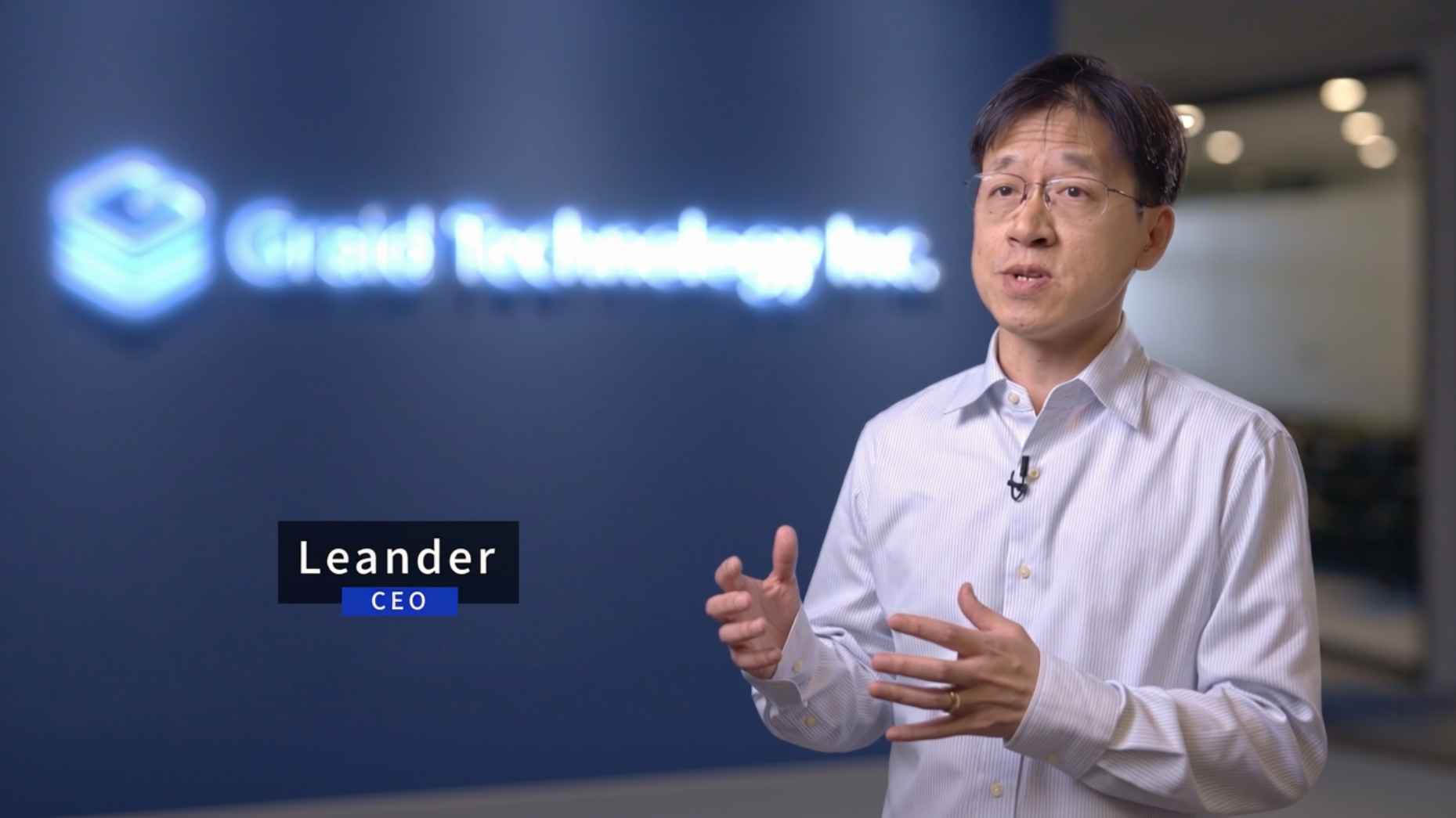
Graid Technology CEO Leander Yu and VP of Product Development Alven Yen explain how moving RAID processing onto the GPU breaks the bottleneck traditional controllers cannot solve, delivering 36 million GPU-initiated IOPS for AI infrastructure.