Contact Us



Events
March 12, 2026
Join Graid Technology at NVIDIA GTC 2026
Graid Technology is proud to exhibit at NVIDIA GTC, the premier global AI conference bringing together innovators shaping the future of accelerated computing.
An idle GPU is the most expensive thing in your data center.
AI models are being pushed to handle millions of tokens — and when long-context workloads overflow HBM, most systems hit a wall. Slow storage shatters the illusion of in-memory performance, and your GPUs pay the price. Graid Technology delivers NVMe at near-memory speeds, so KV Cache overflow is seamless and your GPUs keep running at full tilt. Data protection comes standard. No overhead, no tradeoffs.
We're at NVIDIA GTC 2026 next week — come see it in action!
📍 San Jose McEnery Convention Center | Booth 112🗓️ March 16–19, 2026
And catch us at two partner speaking sessions on Tuesday, March 17:
🎤 Building the Storage Backbone for AIGraid Technology & Altos | 2:00 PM PST | Altos Booth 210
🎤 Building the Future of AI StorageGraid Technology & ASUS | 4:00 PM PST | ASUS Booth 1523
GTC is next week. Find us at Booth 112 and see why your storage might be stalling your GPUs!
News & Resources

Visit Graid Technology at SC26 Booth 1326 in Chicago, November 17–19, to see GPU-accelerated I/O for AI inference and CPU-native data protection with VROC™ by Graid Technology. Stop by to enter our raffle for a pair of Meta glasses.
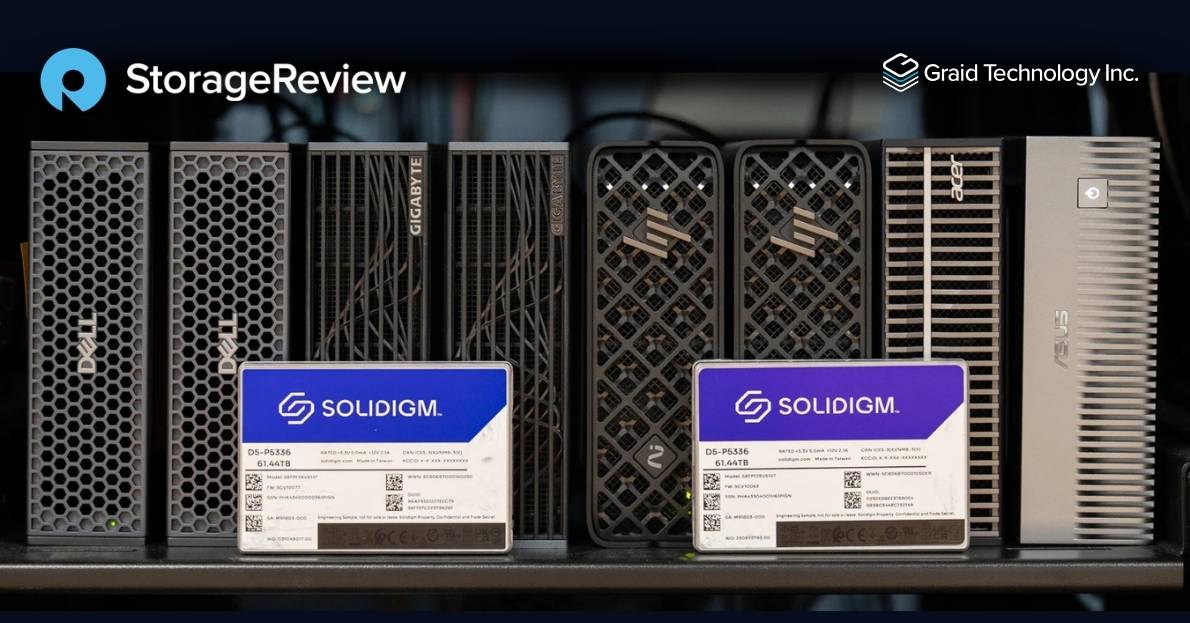
Storage Review built a shared storage host that gives eight NVIDIA DGX Spark systems access to one parity-protected Solidigm QLC pool, with SupremeRAID™ handling RAID 5 on a GPU. Here is what the testing showed and why it matters for AI labs and enterprise desktop AI fleets.

October 15, 2026
Graid Technology Featured in TechArena’s AI Infrastructure Report, The Integrated Machine
Graid Technology is featured in TechArena’s report The Integrated Machine. Field CTO Randy Kreiser discusses KV cache, inference performance, and why storage has to be designed into the rack from the start.