Contact Us


Events
June 4, 2025
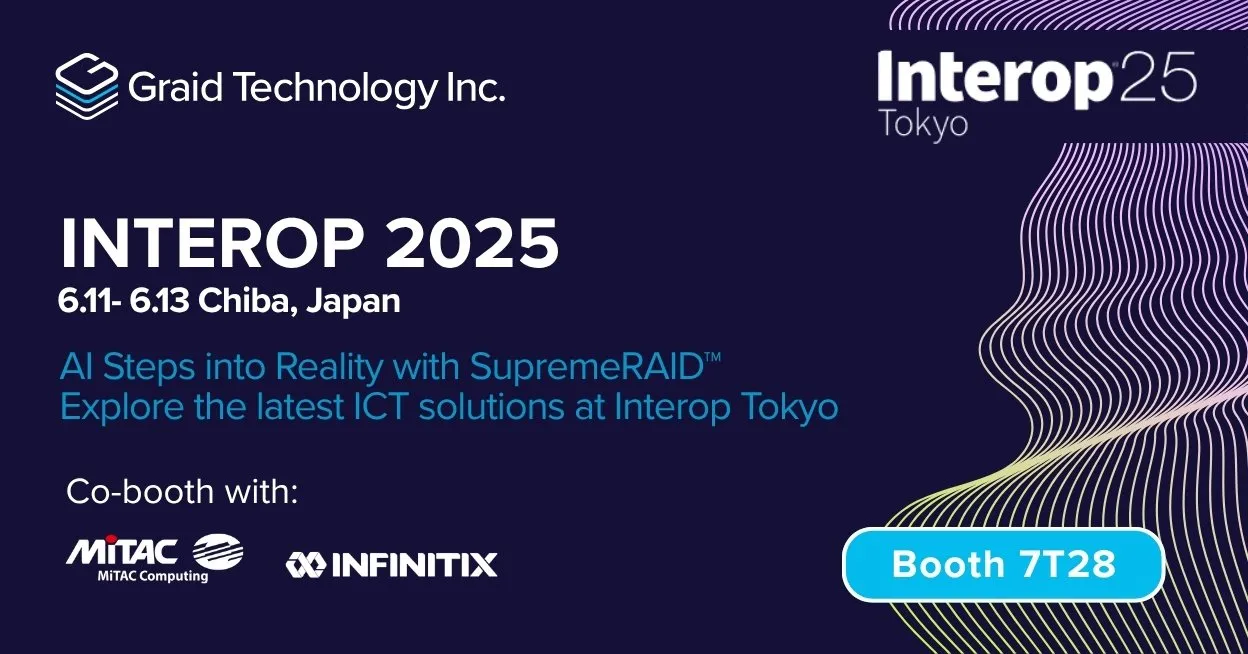
EVENT: INTEROP 2025 Tokyo
🚀 Graid Technology is heading to Interop Japan from June 11–13!
Join us at co-booth 7T28 with MiTAC and Infinitix to experience the future of high-performance computing storage.
At the event, Graid Technology will collaborate to showcase the MiTAC B8261T85E24HR-2T—equipped with 24 bays and SupremeRAID™ SR-1010— delivering unmatched HPC storage performance. This system is ideal for cutting-edge environments like synchrotron radiation facilities and other demanding workloads.
👉 Don’t miss the opportunity to connect with our experts and see the future of data acceleration in action!
—Interop 25 Tokyo —
📍 Where: MAKUHARI MESSE (CHIBA JAPAN)
📅 When: 2025 JUNE 11-13
🔗 Learn more: https://www.interop.jp/2025/en/
News & Resources

Defense systems at the rugged edge need compact servers that can protect and process mission data in extreme conditions. See how Trenton Systems uses VROC™ by Graid Technology and SupremeRAID™ in its U.S.-built TRS14-18.5 1U server to combine resilient boot storage with GPU-accelerated data protection.
.jpg)
Graid Technology will showcase SupremeRAID™ AE and Supreme JBOF at Cypher 2026 in Bengaluru, October 7–9. Explore GPU-accelerated NVMe storage and protected KV cache offloading for AI workloads from server to edge.
September 14, 2026
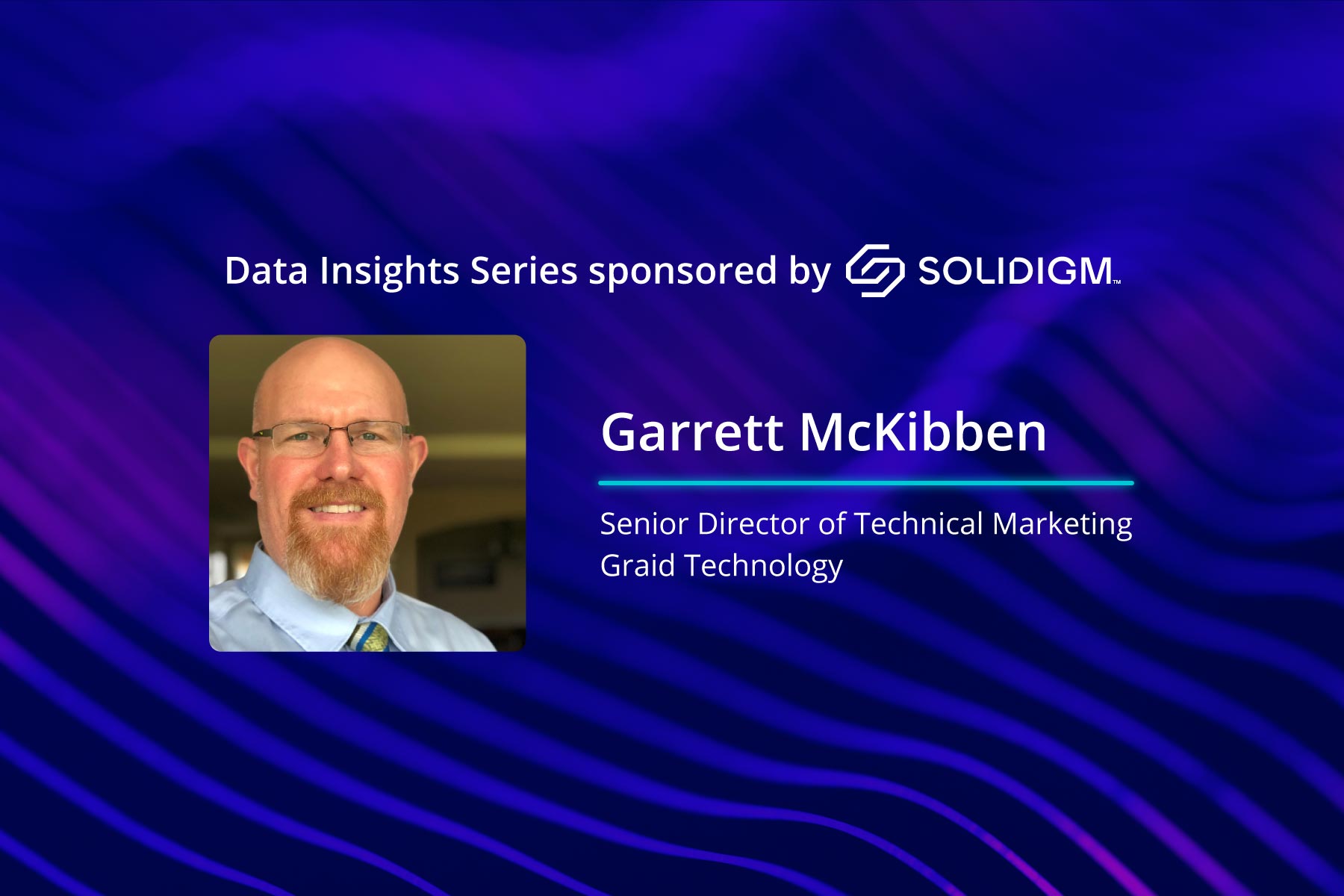
Breaking the KV Cache Inference Wall — Solidigm Data Insights Podcast, Featuring Graid Technology
"You've got a four-lane highway, and to get to your storage, you have to go down to a one-lane bridge." Garrett McKibben joins Solidigm on TechArena's Data Insights podcast to unpack why KV cache overflow is choking AI inference.